
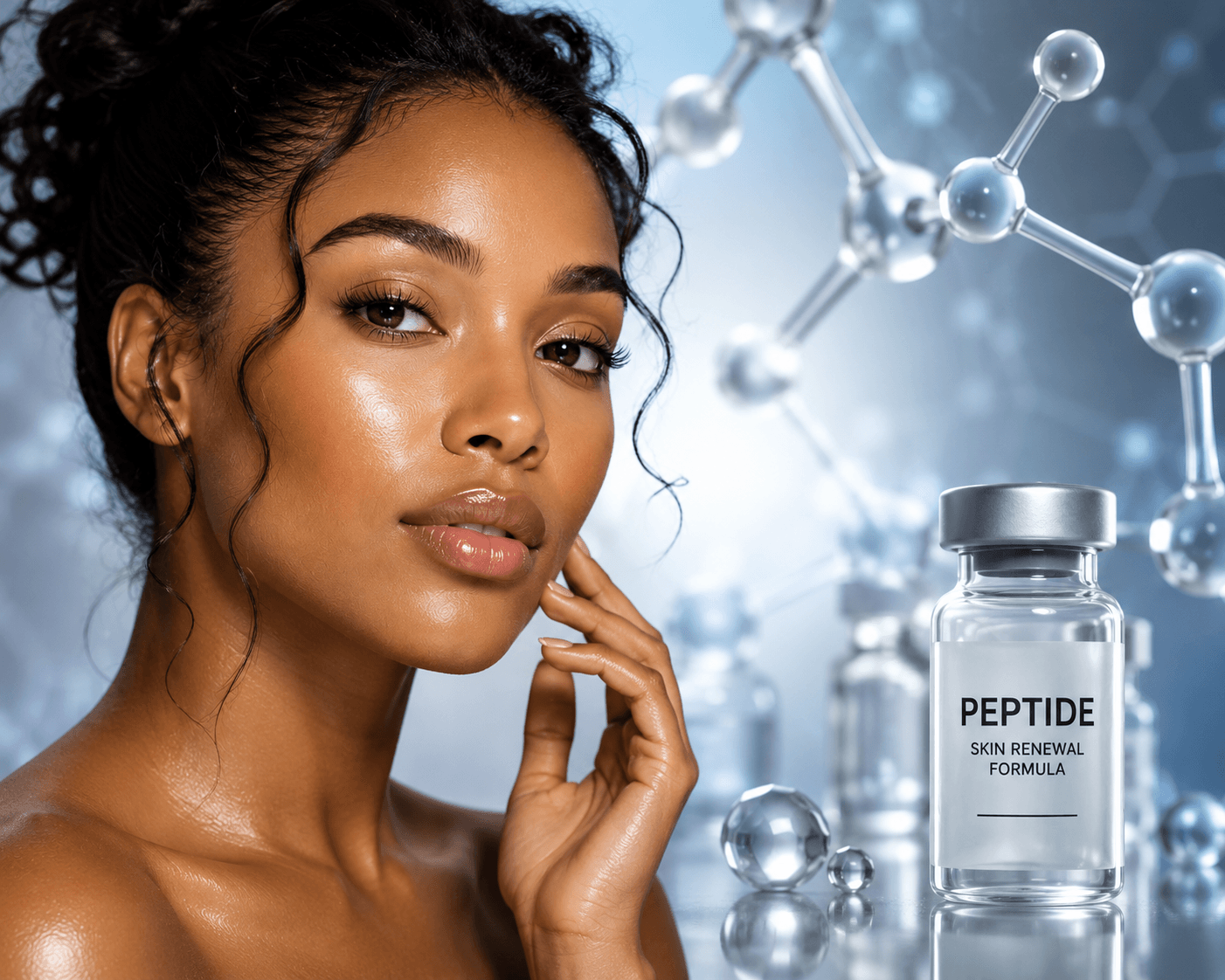
The Tiny Proteins Creating a Big Buzz in Health and Beauty
By MUCH Magazine Staff
Walk into almost any wellness clinic med spa or health conference today and you are likely to hear one word over and over again. Peptides.
Some people say peptides have helped them lose weight. Others believe they have improved their skin increased their energy sped up muscle recovery and slowed the visible signs of aging. While excitement continues to grow many people still ask the same question.
What exactly are peptides?

The answer begins with protein.
Peptides are short chains of amino acids that serve as the building blocks of proteins. Think of amino acids as individual building blocks. When only a few are linked together they form a peptide. When many are connected they become a protein. These tiny molecules act as messengers throughout the body directing cells to repair regenerate and function properly.
Your body naturally produces hundreds of peptides every day. They help regulate hormones metabolism immune function skin health and many other essential processes.
As we grow older the production of many important peptides begins to decline. Scientists believe this natural decrease may contribute to slower healing loss of muscle mass wrinkles lower energy and changes in body composition.
That is one reason peptide therapy has become one of the fastest growing areas of health and wellness.
There is no single peptide. Scientists have identified thousands of different peptides and each one performs a different job.
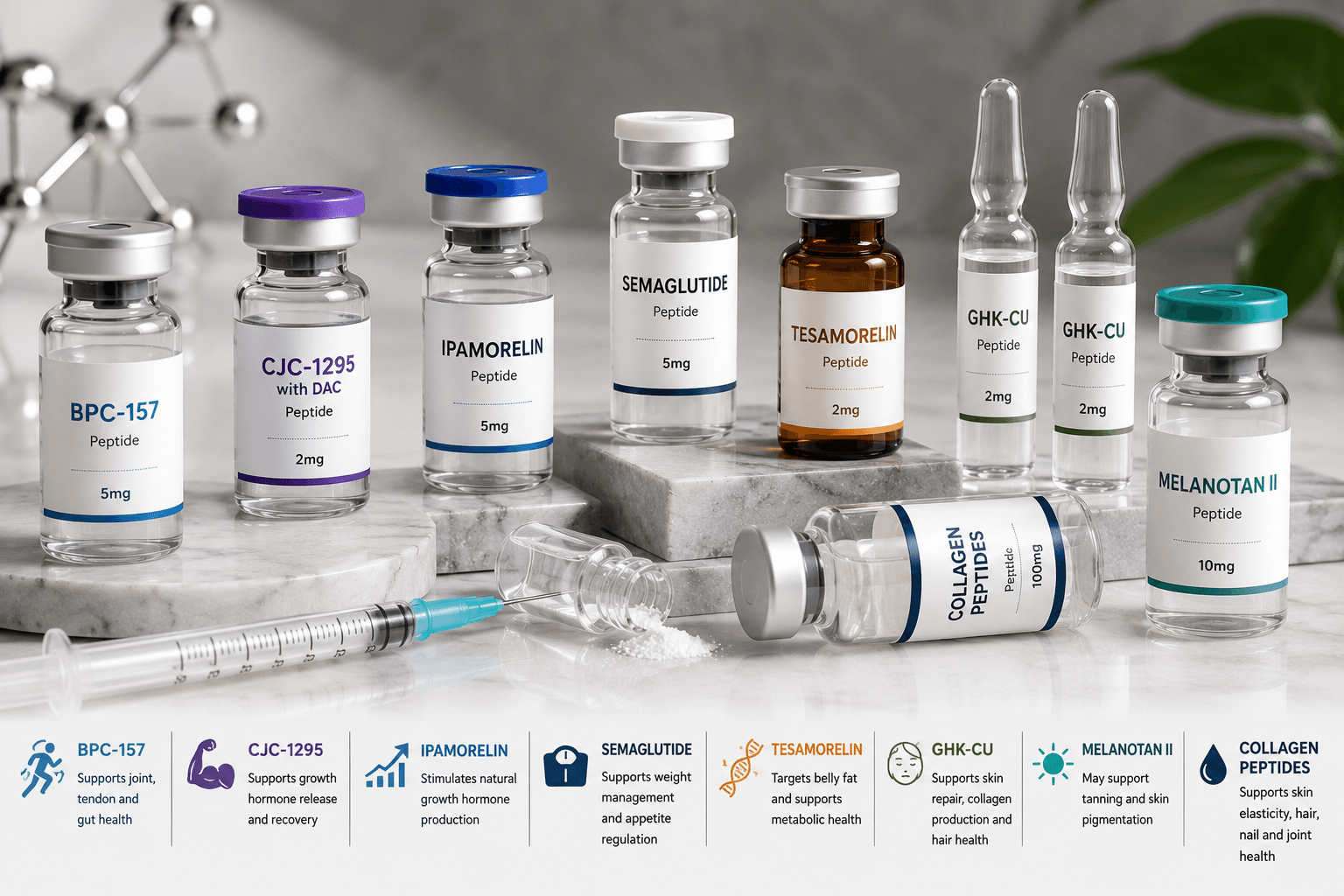
One of the best known categories is GLP 1 receptor agonists. These medications imitate the naturally occurring GLP 1 hormone. Drugs such as semaglutide and tirzepatide have changed the treatment of obesity and Type 2 diabetes by helping regulate blood sugar slowing digestion and reducing appetite. These medications are peptide based prescription drugs developed for specific medical conditions.
Collagen peptides are another popular option. They are commonly taken to support skin elasticity hydration healthier hair stronger nails and joint health. Research suggests that regular collagen supplementation may improve skin hydration and reduce the appearance of fine lines in some people.
BPC 157 is another peptide receiving attention. Researchers are studying its potential role in tissue repair and recovery from injuries. Early laboratory and animal studies have shown promise although more human research is needed before firm conclusions can be reached.
CJC 1295 and Ipamorelin are peptides that encourage the body’s natural release of growth hormone. Some medical clinics offer these therapies although they have not been approved by the Food and Drug Administration as anti aging treatments.
Scientists are also studying peptides that may improve sleep reduce inflammation strengthen the immune system and support brain health. Much of this research is still ongoing but the early findings have created significant interest.
So why are peptides attracting so much attention?
Unlike many traditional medications peptides are designed to target specific biological functions. That precision allows researchers to focus on particular systems within the body instead of affecting multiple systems at once. This targeted approach is one reason peptide research continues to expand.
Consumers should still approach peptide therapy carefully.
Not every peptide promoted online has been thoroughly tested and many products sold as research chemicals have not been evaluated for safety or effectiveness. Some peptide therapies require a prescription while others remain experimental. Anyone considering peptide therapy should first consult a qualified healthcare professional.
Peptides represent one of the most promising frontiers in modern medicine and beauty.
Whether the goal is healthier skin improved metabolism faster recovery or maintaining vitality with age these tiny chains of amino acids are changing the way scientists approach health and longevity.
The research continues to evolve and new discoveries are being made every year.
One thing is already becoming clear.
Peptides are far more than a passing trend. They have the potential to reshape the future of health beauty and medicine.


